CGVR · University of Bremen
Hi, I'm Maximilian Kaluschke.
I'm a software developer and research scientist. I build virtual-reality simulators that train surgeons on skills that are too delicate, too risky, and too expensive to practice on patients.
My simulators combine VR displays with haptic force feedback for surgical disciplines such as dentistry and hip replacement surgery. Behind the scenes are custom algorithms for collision detection, material removal, and real-time visualization — the parts that make a simulator feel like surgery.
My dental simulator has been shown to significantly improve dental students' real-world psychomotor skills. Over a dozen surgeons have given positive feedback on the realism of the haptic sensation, and nearly all of them recommend that students and residents train on my simulators.
01About
I'm a research scientist and software developer at the Computer Graphics and Virtual Reality lab (CGVR) at the University of Bremen, where I received my PhD in 2024 for my thesis on immersive medical VR training simulators with haptic feedback. Since 2014, my research has spanned collision detection on point clouds, continuous material cutting models, and high-force haptic rendering — all in service of one goal: letting surgeons practice a skill that can only be felt.
My simulators are validated the hard way: randomized controlled trials with dental students, replication studies of haptic realism, and hands-on evaluation by practicing surgeons.
- Virtual Reality
- Haptic Rendering
- Collision Detection
- Point Clouds
- Material Removal
- Real-Time Graphics
- C++ / C#
- Unity / Unreal Engine
- User Studies & RCTs
- Surgical Training
02Career highlights
-
2025
HIPS journal version published in IEEE TVCG; presented at IEEE VR 2025 with an Honorable Mention. Randomized controlled trial with 83 dental students published in BMC Medical Education.
-
2024
PhD completed at the University of Bremen: "Immersive Medical VR Training Simulators with Haptic Feedback".
-
2023
HIPS iteration 2 — all five steps of hip arthroplasty — wins the DIVR-Award 2023 for best tech. Stereopsis and hand-tool alignment study published in PLOS ONE.
-
2020
Best Application Paper Award at EuroVR 2020; cadaver-based biomechanical model of acetabulum reaming published in Scientific Reports; first HIPS iteration completed.
-
2019
Continuous material cutting model with haptic feedback published at IEEE VR; DIVR-Award 2019 for best tech.
-
2017–18
HIPS hip replacement simulator demonstrated at IEEE VR 2018; volumetric penetration measure for haptic point-cloud rendering published at World Haptics 2017.
-
2014
First publication on massively-parallel proximity queries for point clouds (VRIPHYS).
03Projects
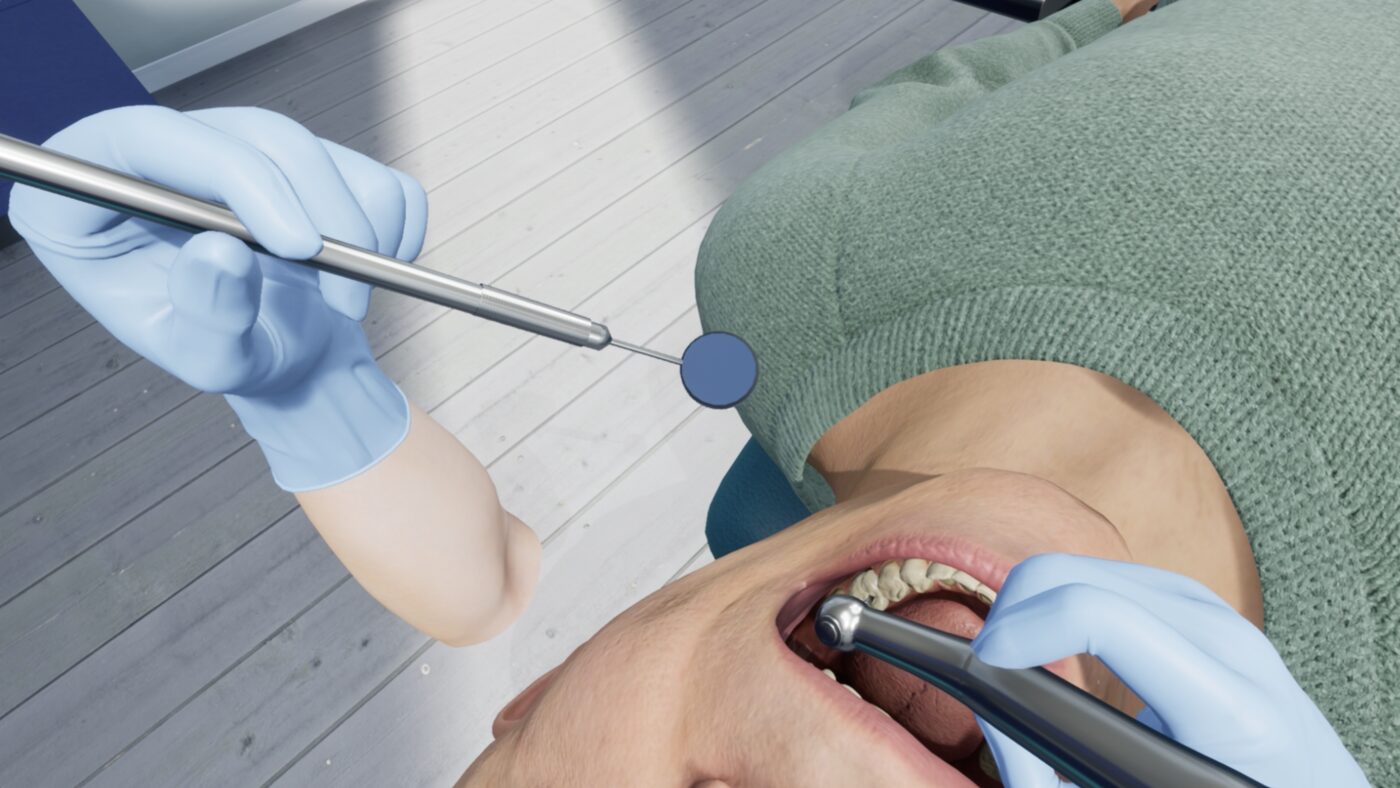
VR Dental Simulator
A VR simulator with haptic feedback for training dental students' psychomotor skills. I developed the core algorithms for collision detection, material removal, and visualization, and demonstrated in a controlled study that training on the simulator significantly improves real-world clinical skills.
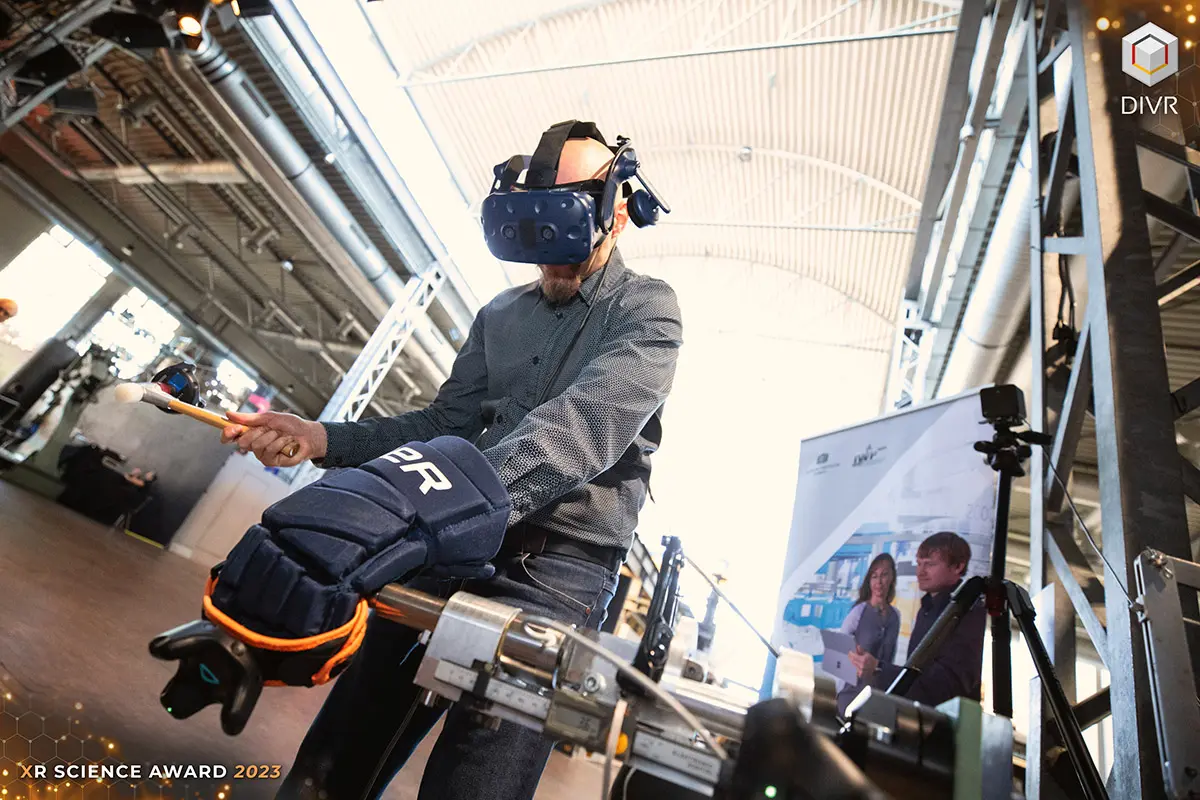
Hip Replacement Surgery Simulator
A bimanual simulator for hip replacement surgery that renders high-force haptic feedback in VR. Over a dozen surgeons confirmed the realism of the haptic sensation, and nearly all who tried it recommend it for training students and resident surgeons.
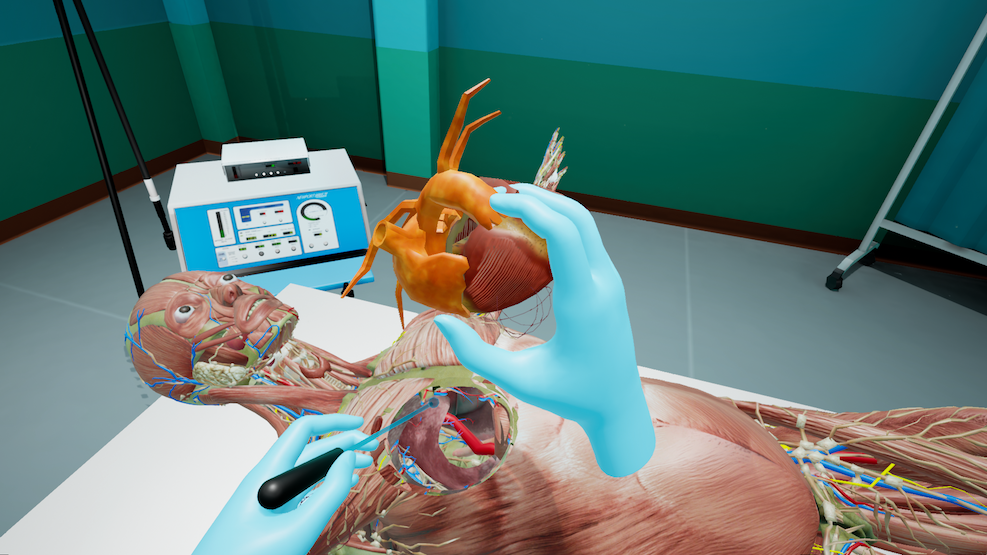
VR Anatomy Atlas
A virtual reality software for teaching human anatomy with over 360 organs: grab a heart out of the body, cut open cross-sections, or remove a thyroid in a prepared teaching scenario — in a virtual operating room.
04Research
I publish on the design, haptic rendering, and learning effectiveness of VR simulators, including a 2024 paper at IEEE VR. See my publications →
05Feedback from surgeons
"Over a dozen surgeons confirmed the realism of the haptic sensation."
"Nearly all who tried the simulator recommend it for training students and resident surgeons."
"Acetabular reaming is rated the most difficult step of hip arthroplasty — the force can only be felt, not described."
06News
-
RCT with 83 dental students published in BMC Medical Education — simulator training significantly improves real-world clinical skills.
-
HIPS journal version published in IEEE TVCG; Honorable Mention at IEEE VR 2025.
-
PhD thesis completed at the University of Bremen.
-
DIVR-Award 2023 for best tech with the five-step HIPS simulator.
-
Best Application Paper Award at EuroVR 2020; DIVR-Award 2019 for best tech.